
Liberia: Facts, History, and Daily Life Today
Looking for facts about Liberia? Liberia is a small country on the West Coast of Africa with a story unlike any other nation on the continent. It was founded with deep ties to the United States, it became Africa’s first independent republic, and today it is a young, resilient country rebuilding schools, farms, and communities. Here are the key facts about Liberia, its history, and daily life today, and why this country is so close to our hearts.
The short answer: key facts about Liberia
- Location: West Africa, on the Atlantic coast, bordered by Sierra Leone, Guinea, and Cote d’Ivoire
- Capital: Monrovia, named after U.S. President James Monroe
- Population: about 5.2 million people (2022 national census)
- Independence: July 26, 1847, making Liberia Africa’s oldest republic
- Official language: English
- Currency: Liberian dollar, with the U.S. dollar also widely used
- Known for: its American roots, tropical rainforests, rice and cassava farming, rubber, and a deeply rooted Christian faith
In this article
Where is Liberia?
Liberia sits on the Atlantic coast of West Africa, just north of the equator. It shares borders with Sierra Leone to the northwest, Guinea to the north, and Cote d’Ivoire to the east, while its southern edge is a long coastline of beaches, lagoons, and river mouths.
The country is roughly the size of Tennessee or Virginia. Its land rises from a flat coastal plain to rolling hills and highlands in the north, and much of it is covered by tropical forest. Liberia is home to a large share of the remaining Upper Guinean rainforest, one of the richest ecosystems in West Africa.
The climate is hot and humid all year. Life follows two seasons: the rainy season, which runs roughly from May to October, and the dry season from November to April. During the rainy months, heavy downpours can flood roads and fields for days, and Monrovia is often described as one of the wettest capital cities in the world.
A short history of Liberia
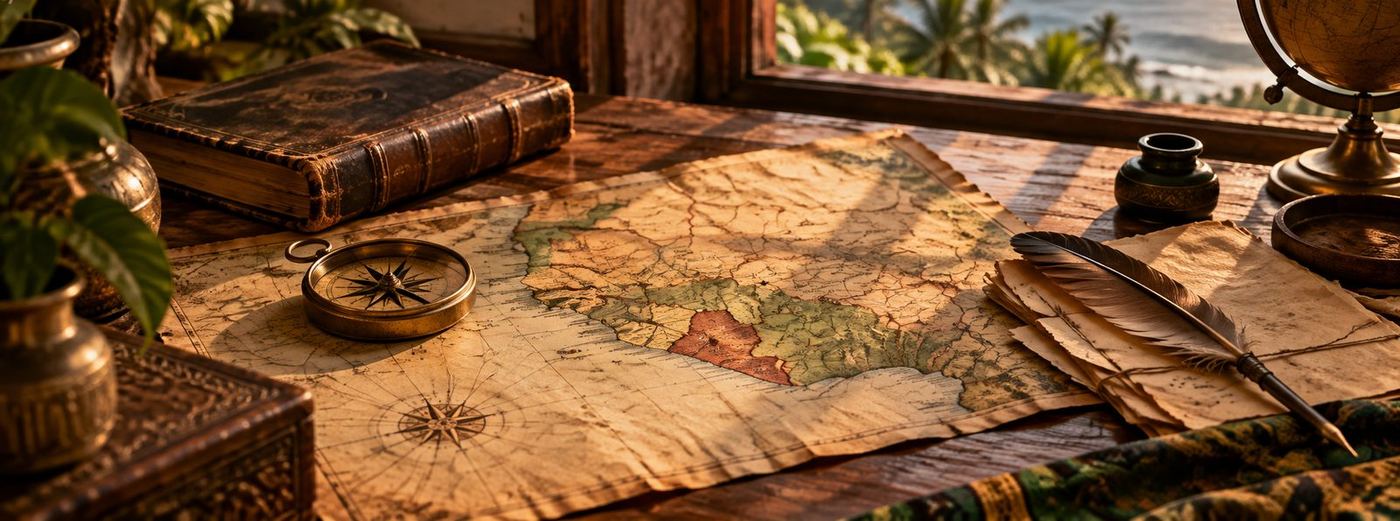
Long before modern borders existed, the land that is now Liberia was home to many indigenous peoples, including the Kpelle, Bassa, Gio, Mano, Kru, Grebo, Vai, and others, who farmed, traded, and built communities along its rivers and forests.
In 1816, a private organization in the United States called the American Colonization Society was formed to resettle free Black Americans in Africa. The first settlers arrived on Providence Island, near present-day Monrovia, in 1822. Over the following decades, thousands of freeborn and formerly enslaved African Americans made the journey.
On July 26, 1847, Liberia declared its independence and became Africa’s first independent republic. Its first president, Joseph Jenkins Roberts, was born in Virginia. The new nation’s constitution and its flag were modeled on those of the United States. The flag’s eleven stripes honor the signers of Liberia’s Declaration of Independence, and its single white star stands for the first free republic in Africa.
Liberia’s history is not a simple story. For generations, power was concentrated among the descendants of the American settlers, often called Americo-Liberians, while indigenous Liberians were largely excluded. Those tensions shaped much of the 20th century.
From 1989 to 2003, Liberia endured two devastating civil wars that destroyed schools, farms, roads, and families. Peace returned in 2003, and in 2006 Ellen Johnson Sirleaf became the first elected female head of state in Africa, later receiving the Nobel Peace Prize in 2011. The country faced another hard test during the Ebola outbreak of 2014 to 2016, which again disrupted schools and harvests. Through all of it, Liberians have shown remarkable resilience.
People, faith, and culture
Liberia is home to about sixteen ethnic groups, and many Liberians speak a local language at home alongside English. Everyday conversation often happens in Liberian English, sometimes called Kolokwa, which has its own rhythm, expressions, and humor.
Faith is central to daily life. Most Liberians are Christian, with a significant Muslim community, and churches are often the heart of a village, serving as places of worship, learning, and gathering.
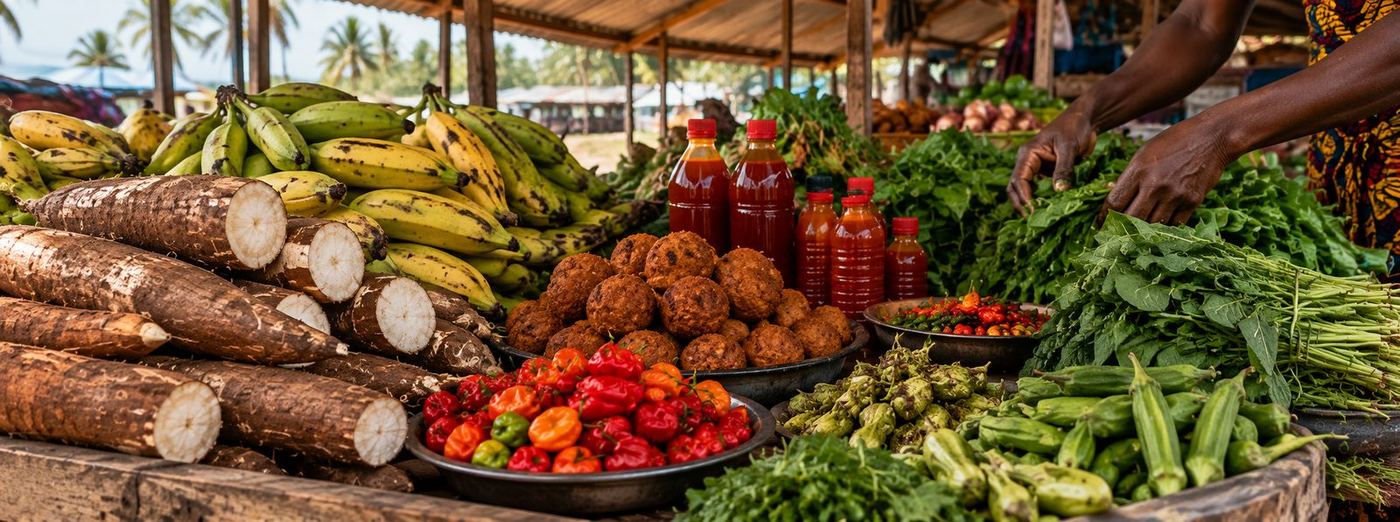
Food tells the story of the land. Rice is the staple of almost every meal, usually served with a rich soup or stew. Popular dishes include palm butter soup, cassava leaf, potato greens, and fufu or dumboy made from cassava. Local markets overflow with cassava, plantains, hot peppers, okra, bitter balls, and bottles of bright red palm oil.
Why this story matters to us
In 1955, missionaries Robert and Sarah Flemister began a Christian mission in Liberia on undeveloped land, building a school, a church, and a ministry from the ground up. Their son, Walter Flemister, was born and raised on that mission. Today, through Abacus Crown Enterprises, he is carrying that legacy forward.
Daily life in Liberia today
For many families, especially outside Monrovia, daily life revolves around farming. Most rural households grow their own rice, cassava, and vegetables, and many keep small plots of oil palm or cocoa for income. Work starts early, before the heat of the day, and often depends on hand tools and the strength of the whole family.
The rainy season shapes everything. Unpaved roads turn to mud, travel between villages can take hours, and getting crops to market becomes harder. These months are also the leanest of the year in many communities, when last season’s harvest runs low before the new one comes in.
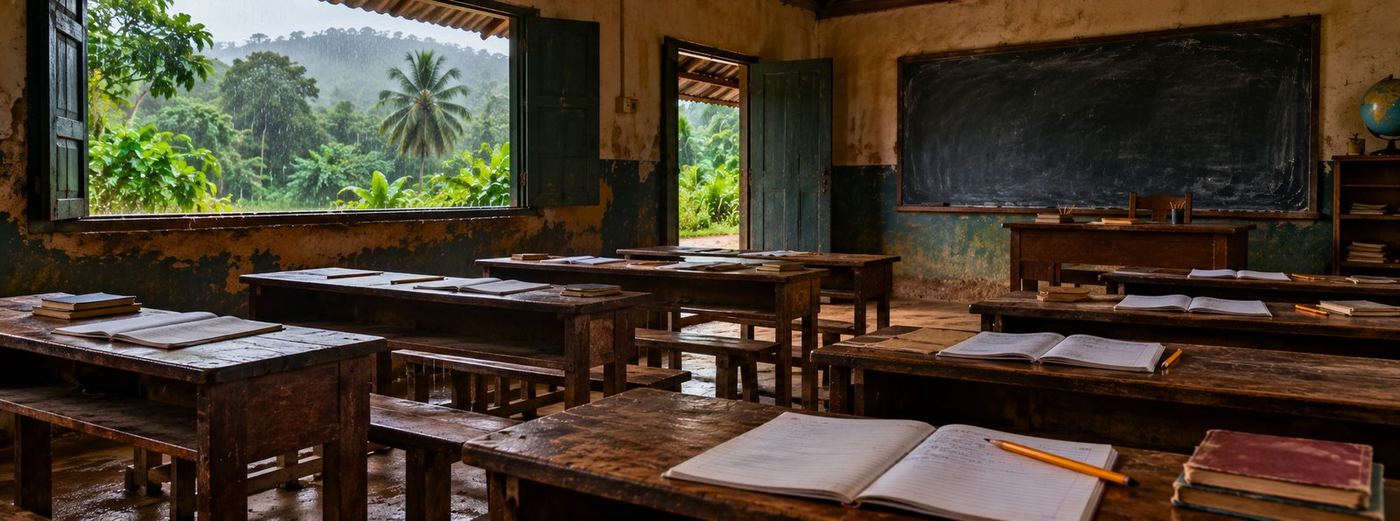
Education is a top priority for Liberian families, but schools are still recovering from years of war and the Ebola outbreak. Many rural schools have few books, simple wooden benches, and limited supplies, and some children attend class on an empty stomach. Even so, parents and teachers work hard to give the next generation a better start.
This is where community-based efforts make the biggest difference. At the mission we serve, that means:
- Christian education from Pre-K through Grade 11, with a focus on learning, character, and faith
- Student nutrition, providing meals that help children stay healthy and focused in class
- Sustainable agriculture, including swamp rice, palm farming, cocoa, vegetables, a fishery, and a piggery
- Community development, creating jobs and practical skills for local families
Facts about Liberia: what is it known for?
- 1. Africa’s oldest republic. Liberia declared independence in 1847, decades before most African nations.
- 2. Its connection to the United States. Founded with the help of an American society, with a capital named after a U.S. president and a flag that echoes the Stars and Stripes.
- 3. Rainforests and wildlife. Liberia protects a large share of West Africa’s remaining Upper Guinean rainforest, home to rare species such as the pygmy hippopotamus.
- 4. Rubber, rice, and palm oil. Rubber has long been a major export, while rice, cassava, and palm oil feed the nation.
- 5. A history-making leader. Ellen Johnson Sirleaf became Africa’s first elected female head of state.
- 6. Resilience and faith. After war and Ebola, Liberians continue to rebuild with hope, strong families, and strong churches.
Common myths about Liberia
Myth: Liberia was an American colony.
Liberia was founded by a private American organization with U.S. government support, but it was never formally a colony of the United States. It declared its independence in 1847.
Myth: Liberians speak French.
Several neighboring countries are French-speaking, but Liberia’s official language is English.
Myth: Liberia is still a country at war.
Liberia has been at peace since 2003 and has held several peaceful elections. Its challenges today are rebuilding schools, roads, and farms, not conflict.
Quick quiz: how well do you know Liberia?
Think you were paying attention? Try these five questions, then tap each one to reveal the answer.
1. Liberia’s capital, Monrovia, is named after which U.S. president?
James Monroe, the fifth president of the United States, who supported the effort to resettle free Black Americans in West Africa.
2. In what year did Liberia declare independence?
1847. That makes Liberia Africa’s oldest republic.
3. How many stripes are on Liberia’s flag, and what do they stand for?
Eleven, honoring the eleven signers of Liberia’s Declaration of Independence.
4. What is Liberia’s official language?
English, alongside many local languages and the widely spoken Liberian English.
5. Bonus: in what year did the Christian mission that Abacus Crown carries on today begin?
1955. Missionaries Robert and Sarah Flemister started with undeveloped land and built a school, a church, and a ministry that still serves the community today. Learn more about the mission ->
“The lines are fallen unto me in pleasant places; yea, I have a goodly heritage.”
Psalm 16:6 (KJV)
How you can make a difference
For more than 70 years, the mission in Liberia has served children and families through faith, education, and practical work. Today, Abacus Crown Enterprises, a registered 501(c)(3) nonprofit, is building on that foundation with a clear goal called Vision 2027: a mission that is increasingly self-sustaining, where education, agriculture, and community development support one another. Here are a few ways to be part of it, whatever fits you best today.
Give
A gift of any size supports Christian education, student meals, and sustainable farming in Liberia.
Partner
Churches, businesses, schools, and foundations can stand with the mission long term.
Pray and share
Pray for the students, teachers, and families of Liberia, and share this article with a friend.
Frequently asked questions
Why was Liberia founded?
Liberia was founded in the early 1800s by the American Colonization Society as a place for free Black Americans to resettle in Africa. Settlers began arriving in 1822, and the country declared its independence in 1847.
What are some interesting facts about Liberia?
Some of the most interesting facts about Liberia: it is Africa’s oldest republic, its capital is named after U.S. President James Monroe, its flag has eleven stripes and one star, English is its official language, and it protects a large share of West Africa’s remaining Upper Guinean rainforest.
What is the capital of Liberia?
The capital is Monrovia, the country’s largest city and main port, named after U.S. President James Monroe.
What language is spoken in Liberia?
English is the official language. Many Liberians also speak one of the country’s local languages and Liberian English in everyday life.
Is Liberia a Christian country?
Liberia does not have an official religion, but most Liberians are Christian, and there is a significant Muslim community. Churches play an important role in community life.
What do people eat in Liberia?
Rice is the staple food, usually served with soups and stews such as palm butter soup, cassava leaf, or potato greens. Cassava, plantains, and fish are also common.
How can I help people in Liberia?
You can support trusted organizations working on the ground. Abacus Crown Enterprises supports Christian education, student nutrition, sustainable agriculture, and community development in Liberia, and you can give, volunteer, partner, or pray with us.
Help build a self-reliant future in Liberia
Your gift supports Christian education, daily meals for students, and sustainable farming at a mission that has served Liberia since 1955.
Secure donation through Zeffy. Abacus Crown Enterprises Inc. is a registered 501(c)(3) nonprofit, Tax ID 92-1605282. Gifts are tax-deductible as allowed by law, and gifts made by December 31 count toward this year’s taxes.