
Farming in Liberia: Crops, Challenges, and Sustainable Solutions
Farming in Liberia is not just an industry. For most families it is how they eat, how they earn, and how they plan for the future. Yet many farmers still work with hand tools, depend on the weather, and struggle to grow enough rice to feed their families. This guide explains how agriculture in Liberia works, the main crops and types of farming, the biggest problems farmers face, and what makes a sustainable farming project last.
The short answer: farming in Liberia at a glance
- Who farms: most rural Liberian households depend on farming for food and income
- Main food crops: rice and cassava, plus plantains, vegetables, and peppers
- Main cash crops: rubber, oil palm, cocoa, and coffee
- Common types of farming: upland rice through shifting cultivation, lowland or swamp rice, tree crops, vegetable gardens, livestock, and fish farming
- Biggest challenges: low yields, hand tools only, heavy rains and poor soils, bad roads, and a heavy reliance on imported rice
In this article
Why agriculture is so important in Liberia
Agriculture is the backbone of Liberia’s economy and the main source of work for most of its people. When harvests are good, families eat well and children stay in school. When harvests fail, the whole community feels it. Here are five reasons agriculture matters so much:
- 1. Food security. Most rural families eat what they grow. A strong harvest is the difference between full meals and hungry months.
- 2. Jobs and livelihoods. Farming employs more Liberians than any other sector, especially in rural areas.
- 3. Income from cash crops. Rubber, oil palm, cocoa, and coffee bring in money for school fees, medicine, and tools.
- 4. Less dependence on imports. Liberia buys much of the rice it eats from abroad. Growing more at home keeps food affordable and money in local communities.
- 5. Strong rural communities. Productive farms give young people a reason to build a future at home instead of leaving for the city.
The main crops of Liberia
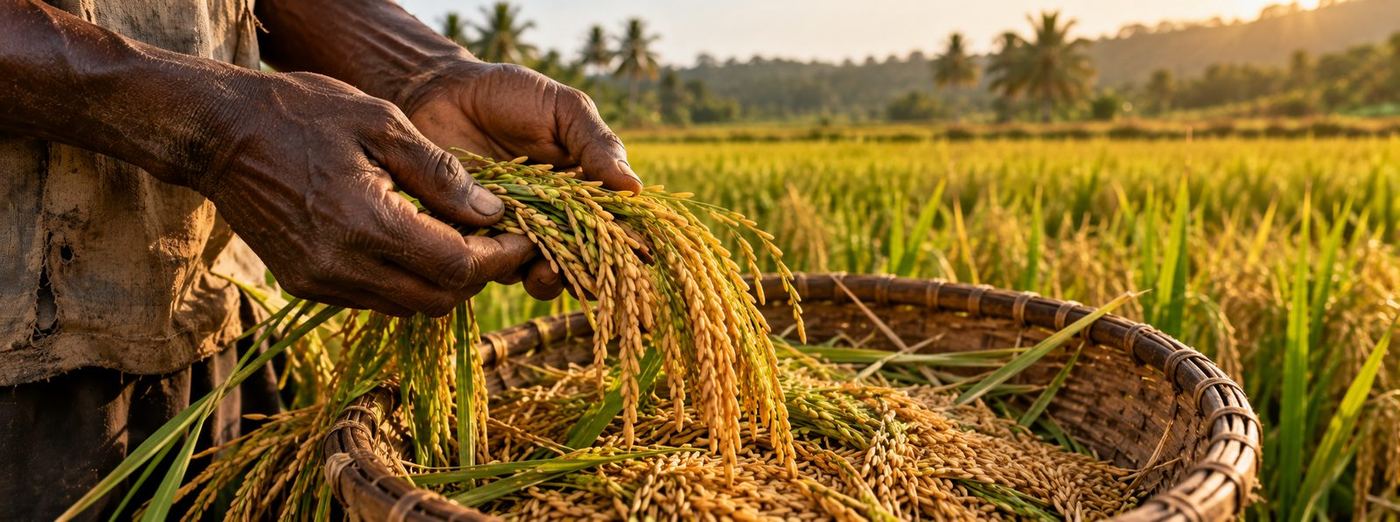
Rice is the heart of the Liberian diet, eaten at almost every meal. Farmers grow it both on hillsides (upland rice) and in wet lowlands and swamps (lowland rice).
Cassava is the second staple. It grows in poor soils, survives dry spells, and its leaves are cooked into one of Liberia’s favorite dishes.
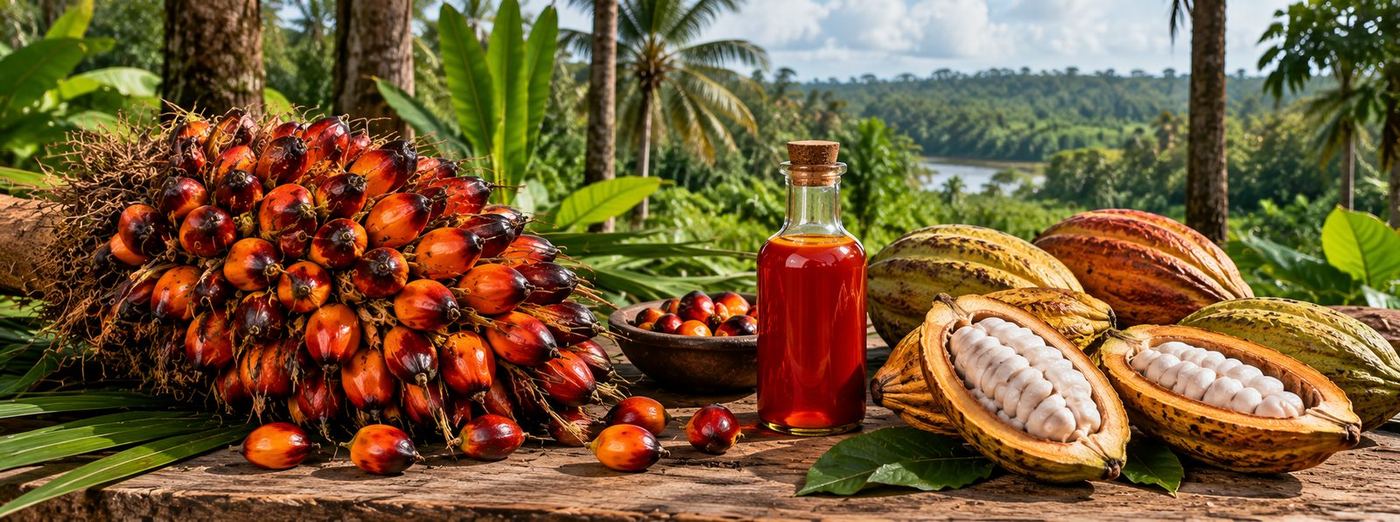
Oil palm produces the bright red palm oil used in kitchens across the country, and it is also an important source of income.
Cocoa and coffee are tree crops grown mostly by smallholder farmers and sold for export.
Rubber has been one of Liberia’s most important exports for generations.
Families also grow plantains, bananas, peppers, okra, eggplant, and leafy greens, and raise goats, pigs, chickens, and fish where they can.
Types of farming in Liberia
Liberian farmers use several farming systems, often side by side on the same family land:
- Shifting cultivation (upland farming). Farmers clear a patch of bush, often by slash and burn, grow upland rice and other crops for a season or two, then move on and let the land rest. It needs little equipment but a lot of labor and land.
- Lowland and swamp rice farming. Rice is grown in naturally wet valleys and swamps. With good water control, swamp rice can be planted on the same land year after year and usually yields more than upland rice.
- Tree crop farming. Oil palm, rubber, cocoa, and coffee are grown on small family plots or larger plantations for long-term income.
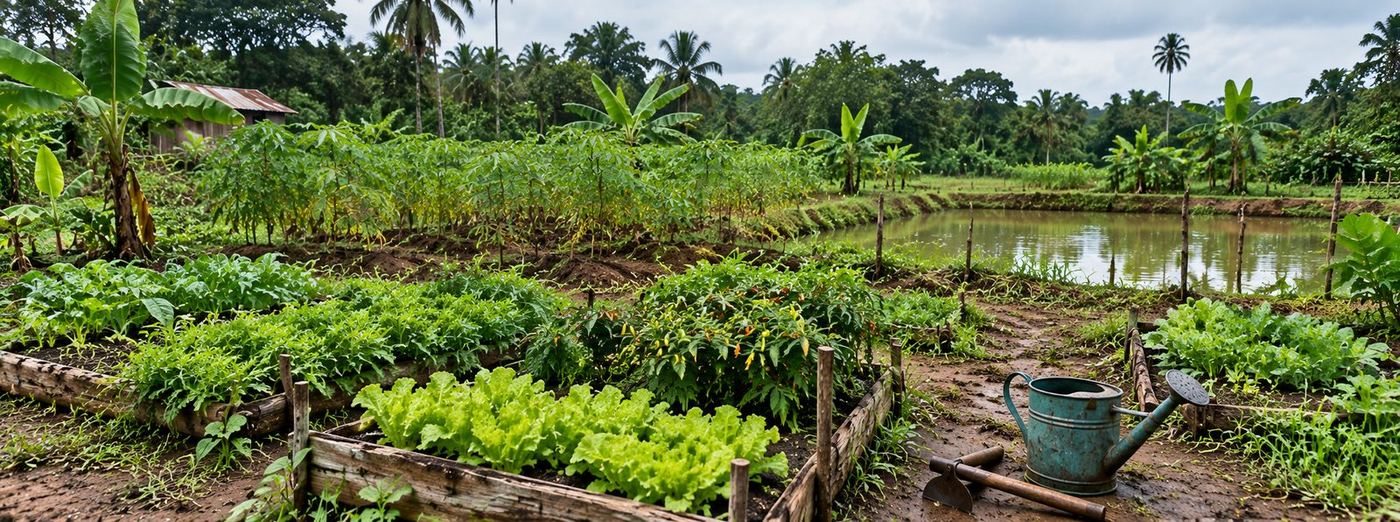
- Vegetable gardening. Small gardens near homes and towns grow peppers, greens, okra, and eggplant for the family table and local markets.
- Livestock and fish farming. Goats, pigs, and poultry are kept in villages, and small fish ponds provide protein and extra income.
Problems of agriculture in Liberia
Liberia has fertile valleys, plenty of rain, and hardworking farmers. So why is it still hard to grow enough food? These are the main problems farmers face:
- Low yields. Most farms rely on hand tools, saved seed, and little or no fertilizer, so each acre produces far less than it could.
- Heavy rains and poor soils. Intense rainy seasons wash nutrients out of the soil, and repeated slash and burn farming wears land down and clears forest.
- Bad roads and storage. During the rainy season many farm roads become impassable, and without proper storage a share of every harvest is lost to pests and moisture.
- Limited training, tools, and credit. Few farmers have access to improved seeds, equipment, or loans to grow beyond survival farming.
- The legacy of war and Ebola. Years of civil war and the 2014 to 2016 Ebola outbreak disrupted farming, markets, and the passing of skills between generations.
- Young people leaving farms. When farming does not pay, many young Liberians move to the city in search of work.
The good news
Each of these problems has a practical answer: training, better water control, more than one crop, and long-term local commitment. That is exactly the work our mission in Liberia is focused on.
What makes a farming project last
Many well-meaning farming projects in Africa fade once the funding ends. The ones that last tend to share five qualities. Whether you are a donor, a church, or simply curious, these are good questions to ask about any agriculture effort:
Approaches that often fall short
- One-time handouts of seeds or tools with no training or follow-up
- Projects built around a single cash crop, leaving families exposed when prices fall
- Programs run entirely from abroad, without local people leading the work
How the mission farms in Liberia
Abacus Crown Enterprises continues a Christian mission in Liberia that began in 1955, when Robert and Sarah Flemister started with undeveloped land and built a school, a church, and a ministry. Today the mission has more than 500 acres of land, and agriculture is at the center of its plan for the future.
Here is how that work lines up with the five qualities above:
- Teaching: farming projects double as practical training for students and adults, so skills stay in the community.
- Diversity: the mission is developing palm farming, a fishery, a piggery, swamp rice, cocoa, and vegetable production.
- Local fit: every one of those crops is suited to Liberia’s land and climate.
- Feeding people: agriculture supports the student nutrition program, which provides meals for children attending the mission’s Christian school.
- Long-term commitment: through Vision 2027, the goal is a mission that is increasingly self-sustaining by December 2027, with farming that provides food, creates jobs, and supports the school.
We encourage you to look closely before you give. Abacus Crown Enterprises Inc. is a registered 501(c)(3) nonprofit, Tax ID 92-1605282, and you are always welcome to contact us with any questions about the work.
“And let us not be weary in well doing: for in due season we shall reap, if we faint not.”
Galatians 6:9 (KJV)
How you can help
You do not need to be a farmer to help Liberian families grow their own future. Choose the step that fits you today:
Give
Help provide seeds, tools, training, and meals for students. Every gift counts, large or small.
Partner
Churches, businesses, and foundations can support a specific project over time.
Volunteer
Agriculture, education, or business skills can make a real difference.
Pray and share
Pray for a good harvest and share this article with your church or small group.
Frequently asked questions
What are the main crops grown in Liberia?
The main food crops are rice and cassava, along with plantains and vegetables. The main cash crops are rubber, oil palm, cocoa, and coffee.
What types of farming are practiced in Liberia?
The main types are shifting cultivation of upland rice, lowland or swamp rice farming, tree crop farming, vegetable gardening, livestock keeping, and fish farming.
What are the problems of agriculture in Liberia?
The biggest problems are low yields, reliance on hand tools, soils weakened by heavy rains and slash and burn farming, poor roads and storage, limited access to training and credit, and young people leaving farms for the city.
Why is agriculture important to Liberia?
Agriculture feeds most families, employs more Liberians than any other sector, brings income through cash crops, reduces the need for imported food, and keeps rural communities strong.
Does Liberia import rice?
Yes. Even though rice is the national staple and grows well in Liberia, the country imports a large share of the rice it eats. Increasing local rice production is a national priority.
How can I support farmers in Liberia?
Support organizations that invest in training, diverse crops, and long-term local work. Abacus Crown Enterprises develops sustainable agriculture on its mission land in Liberia, and you can help by giving, partnering, volunteering, or praying.
Help Liberian families grow their own future
Your gift supports sustainable farming, practical training, and daily meals for students at a mission that has served Liberia since 1955.
Secure donation through Zeffy. Abacus Crown Enterprises Inc. is a registered 501(c)(3) nonprofit, Tax ID 92-1605282. Gifts are tax-deductible as allowed by law, and gifts made by December 31 count toward this year’s taxes.