
Liberian Food: Traditional Dishes, Ingredients, and How Liberians Eat
Liberian food is hearty, spicy, and built around one thing above all: rice. From palm butter and cassava leaf to jollof rice and fufu, the dishes of Liberia bring together West African traditions, local farm produce, and a few influences from across the Atlantic. Here is a friendly guide to traditional Liberian dishes, the ingredients behind them, how families eat, and what food means for children in Liberia today.
The short answer: Liberian food at a glance
- The staple: rice, eaten at almost every meal
- Classic dishes: palm butter, cassava leaf, potato greens, palava sauce, jollof rice, dry rice, fufu, and dumboy
- Key ingredients: red palm oil, cassava, hot peppers, greens, fish, chicken, plantains, and okra
- How it is served: a rich stew, which Liberians often call a “soup”, spooned over rice or eaten with fufu
- Flavor: bold and often very spicy, thanks to habanero and Scotch bonnet peppers
In this article
Rice: the heart of every Liberian meal
If there is one thing to know about Liberian food, it is this: rice comes first. Liberians eat rice at breakfast, lunch, and dinner, and a plate of rice with a good soup is the most familiar meal in the country. A well-known saying sums it up: if you have not eaten rice today, you have not eaten.
Families eat both imported rice and “country rice”, which is grown locally, often in swamp fields. Rice is cooked plain, turned into jollof rice, served “dry” with meat, and even ground into flour for rice bread. Because rice matters so much, its price and supply have shaped Liberia’s history, and growing more rice at home is a national priority. You can read more about this in our guide to farming in Liberia.
Traditional Liberian dishes you should know
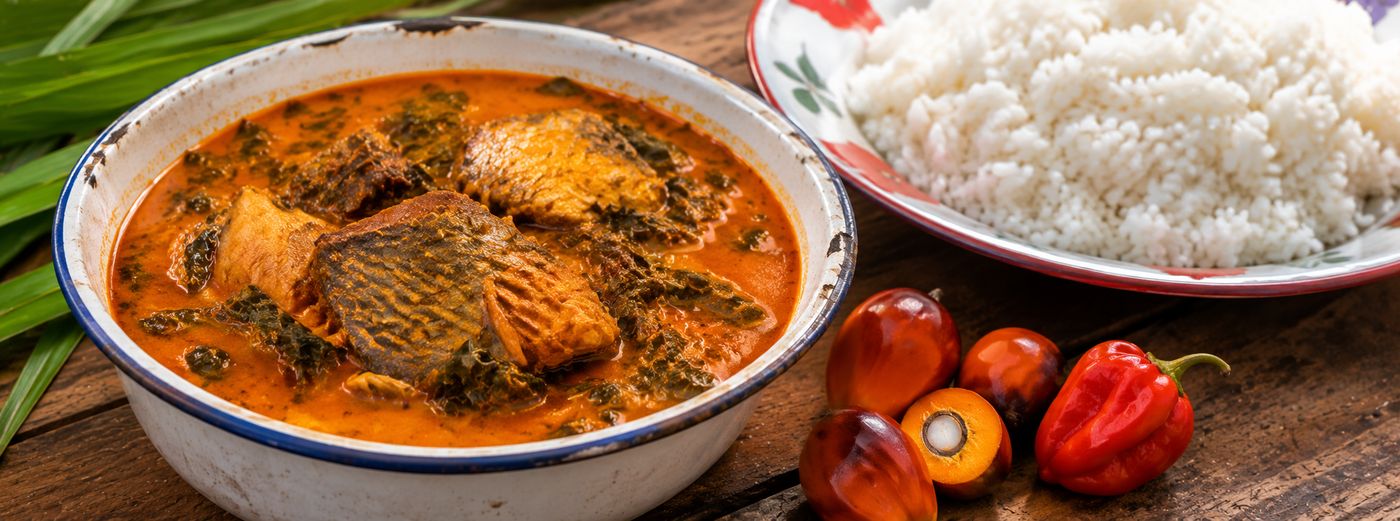
Most Liberian dishes are stews made with greens, palm oil, peppers, and fish or meat, then served over rice. Here are the ones you will hear about most often.
- 1. Palm butter. A rich, deep orange stew made from the pulp of palm nuts, usually cooked with fish or meat and peppers. It is one of the best loved dishes in Liberia and is almost always eaten with rice.
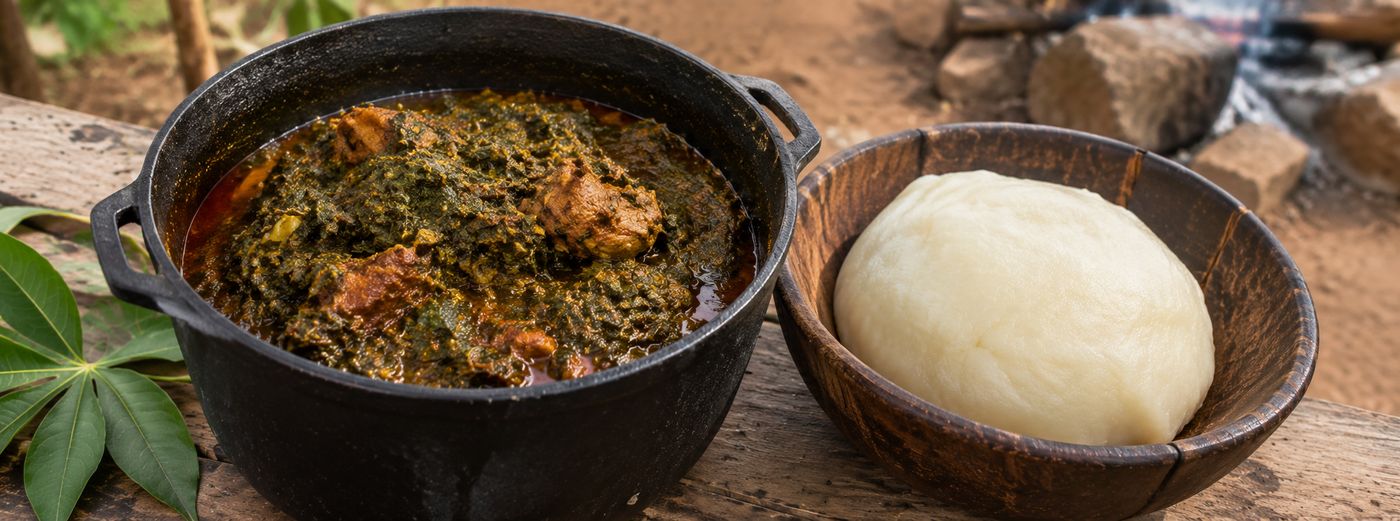
- 2. Cassava leaf. Young cassava leaves are pounded or ground, then slowly braised in broth with red palm oil, meat or fish, and hot pepper. It is hearty, savory, and a true Liberian classic.
- 3. Potato greens. Made from the leaves of the sweet potato plant, chopped finely and cooked into a flavorful stew. Sweet potato greens grow easily in Liberia, so this dish is common in many homes.
- 4. Palava sauce. A stew of jute leaves, sometimes called “plateau”, cooked in broth with meat or fish. The leaves give it a smooth, slightly thick texture.
- 5. Jollof rice. Rice cooked in a seasoned tomato and pepper base, often with chicken or other meat and vegetables. Jollof is loved across West Africa, and every country has its own style.
- 6. Dry rice. Rice served without a soup, often with chicken, luncheon meat, or corned beef mixed in.
- 7. Fufu and dumboy. Soft, stretchy dough made by pounding starchy foods. Dumboy is made from boiled cassava, while fufu is usually made from fermented cassava, plantain, or taro. Both are eaten with soup, often by hand.
- 8. Pepper soup. A light but very spicy broth with fish or meat, often eaten when someone needs warming up or feels unwell.
- 9. Toborghee. A bitter stew of African eggplants cooked with palm oil, linked to the Lorma people of Lofa County.
- 10. Rice bread and country breh. Sweet, moist breads made with rice flour, often with banana. Liberians also enjoy cornbread, sour bread, banana bread, and cakes.
Common ingredients in Liberian cooking
Liberian cooking uses what grows well in the country’s warm, rainy climate. If you look into a Liberian kitchen, you are likely to find:
- Red palm oil for color, richness, and flavor
- Cassava, both the root and the leaves
- Greens such as potato greens, collard greens, jute leaves, and bitterleaf
- Hot peppers, especially habanero and Scotch bonnet
- Bitter balls, a small vegetable similar to eggplant
- Fish, fresh or dried, which is one of the most important sources of protein
- Chicken and other meats
- Plantains, sweet potatoes, okra, eddoes (taro), coconut, and tropical fruit
Many of these crops, including rice, cassava, oil palm, and vegetables, are grown by small family farms. That is why food in Liberia is so closely tied to farming.
How Liberians eat
A typical Liberian meal is simple and filling: a generous mound of rice with a stew spooned over it. In Liberian English, these stews are usually called “soups”, so you might hear someone say they are having “palm butter soup” or “potato greens soup” for dinner.
Food is often shared. Families cook in large pots and serve everyone from the same meal, and visitors are welcomed with a plate. Fufu and dumboy are often eaten by hand, pinched into small pieces and dipped into the soup.
Liberian food also carries traces of the country’s history. Americo-Liberians, descendants of the African Americans who settled in Liberia in the 1800s, brought dishes such as cornbread and sweet breads, and some recipes show Caribbean influences too. To learn more about that history, see Liberia: facts, history, and daily life today.
A meal can change a school day
For many children in rural Liberia, the meal they receive at school is the most reliable one of the day. A full stomach helps them focus, learn, and keep coming back to class.
Food and hunger in Liberia today
Liberia has fertile land and plenty of rain, yet many families still struggle to put enough food on the table. The country imports a large share of the rice it eats, so when global prices rise, families feel it quickly. Liberia’s Ministry of Agriculture has set a goal of growing much more of the country’s rice at home.
Several things make food hard to come by for rural families:
- High rice prices when imports become more expensive
- Lean months during the rainy season, before the new harvest comes in
- Small farms with hand tools that produce less than they could
- Bad roads that make it harder to bring food to market
For children, this matters most. A child who comes to school hungry finds it much harder to concentrate, and some miss school altogether when food is short at home.
How the mission feeds students
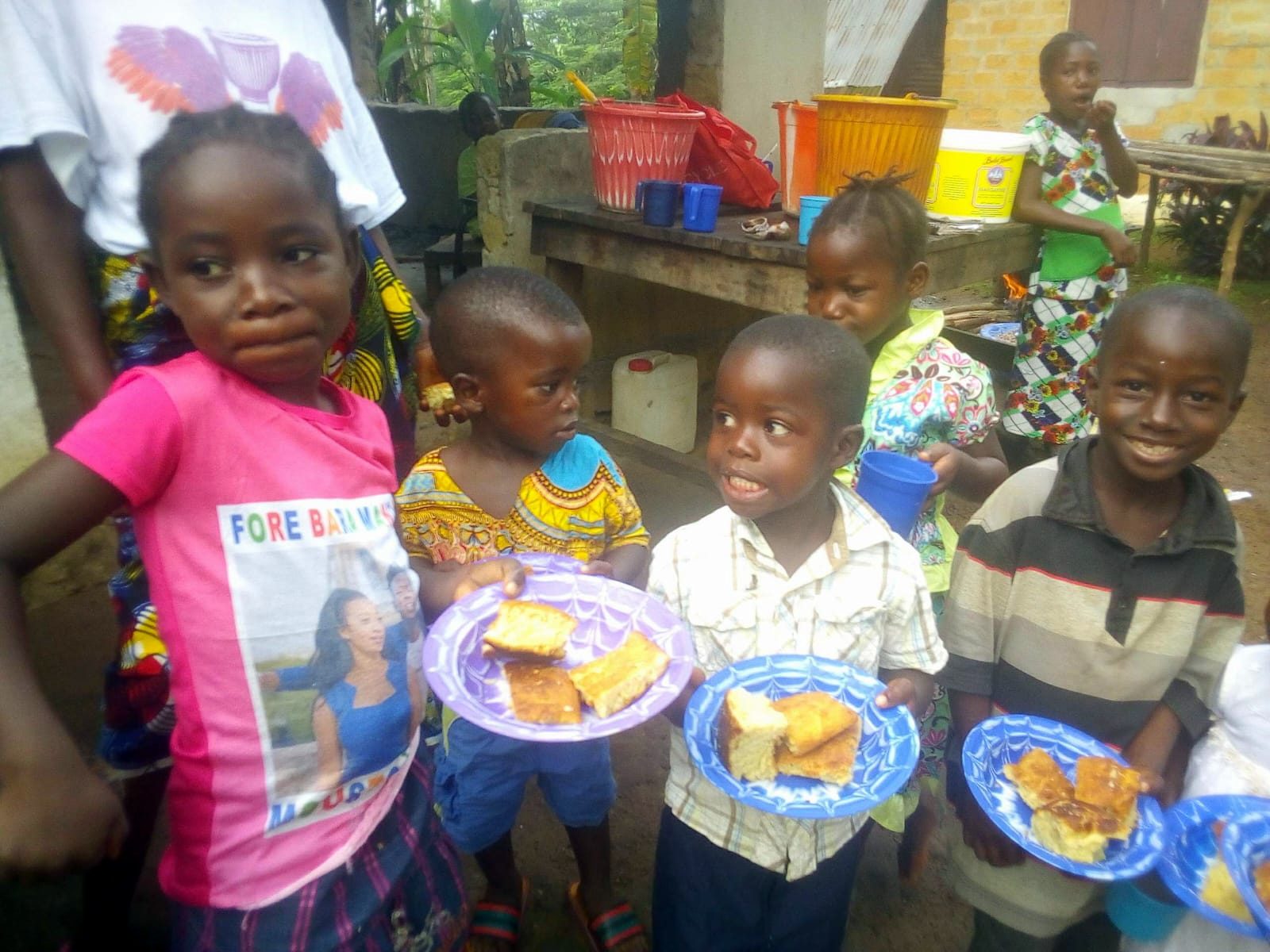
Abacus Crown Enterprises continues a Christian mission in Liberia that began in 1955, with a school that today teaches students from Pre-K through Grade 11. Through its Student Nutrition Initiative, the mission provides nutritious meals that help students stay healthy, learn better, and ease the burden on their families.
The mission is also building toward feeding itself. On its land, it is developing swamp rice, palm farming, a fishery, a piggery, cocoa, and vegetable production through its Sustainable Agriculture program. The goal, called Vision 2027, is a mission where the farm helps supply the school and the community for years to come.
“And if thou draw out thy soul to the hungry, and satisfy the afflicted soul; then shall thy light rise in obscurity.”
Isaiah 58:10 (KJV)
Quick quiz: Liberian food
How much do you remember? Tap each question to see the answer.
1. What is the staple food of Liberia?
Rice. It is eaten at almost every meal, usually with a stew poured over it.
2. What are potato greens made from?
The leaves of the sweet potato plant, chopped finely and cooked into a stew.
3. What gives palm butter its rich orange color?
Palm nuts. The stew is made from the pulp of the oil palm fruit.
4. What is the difference between dumboy and fufu?
Dumboy is made from boiled cassava, while fufu is usually made from fermented cassava, plantain, or taro. Both are pounded into a soft dough and eaten with soup.
How you can help
Every plate of food at the mission school starts with someone who cares. Choose the step that fits you today:
Give
Help provide nutritious meals for students and support the mission farm that grows their food.
Partner
Churches, businesses, and foundations can support the nutrition program over time.
Volunteer
Skills in nutrition, agriculture, or education can make a real difference.
Pray and share
Pray for the students and families of Liberia, and share this article with someone who loves West African food.
Frequently asked questions
What is the national dish of Liberia?
Liberia has no single official national dish, but rice with a stew such as palm butter, cassava leaf, or potato greens is the most typical Liberian meal. Jollof rice is also very popular.
What do Liberians eat for breakfast?
Many Liberians eat rice with soup even in the morning. Breads such as rice bread, cornbread, and sweet breads, along with tea or coffee, are also common.
Is Liberian food spicy?
Yes, often. Many dishes are cooked with habanero or Scotch bonnet peppers, although the level of heat varies from family to family.
What is the difference between Liberian food and other West African food?
Liberian food shares many dishes with its neighbors, such as jollof rice and fufu. What stands out is how central rice is, the popularity of stews like palm butter, potato greens, and cassava leaf, and some influences from the African Americans who settled in Liberia in the 1800s.
Why do Liberians call stews “soup”?
In Liberian English, “soup” usually means a thick stew served over rice or with fufu, such as palm butter soup or potato greens soup.
How can I help feed children in Liberia?
You can support trusted organizations working on the ground. Abacus Crown Enterprises provides nutritious meals for students at its mission school in Liberia and is building a farm to help supply that food. You can give, partner, volunteer, or pray with us.
Help a student in Liberia learn on a full stomach
Your gift supports daily meals for students and the mission farm that grows their food, at a Christian mission that has served Liberia since 1955.
Secure donation through Zeffy. Abacus Crown Enterprises Inc. is a registered 501(c)(3) nonprofit, Tax ID 92-1605282. Gifts are tax-deductible as allowed by law, and gifts made by December 31 count toward this year’s taxes.